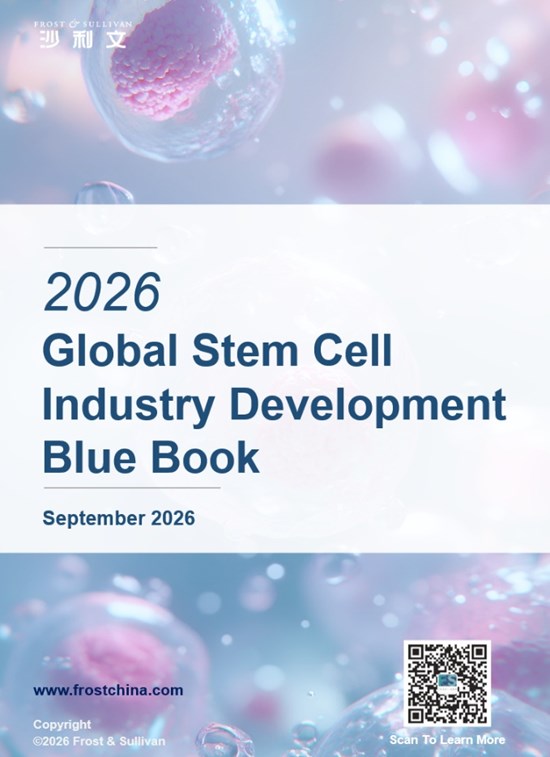
Frost & Sullivan Released the 2026 Global Stem Cell Industry Development Blue Book
Newsfile
September 09, 2026 12:56PM GMT
Shanghai, China--(Newsfile Corp. - September 9, 2026) - Frost & Sullivan officially unveils the 2026 Global Stem Cell Industry Development Blue Book, providing an in-depth analysis of the global stem cell industry. The report comprehensively examines the fundamental definitions and classifications of stem cells, clinical applications across multiple diseases, regulatory frameworks in major global markets, the current status of core stem cell therapy technologies, challenges in clinical translation, and future industry trends. It also outlines the evolution of the industry and its technologies, explores development potential, and analyzes the technological, clinical, and policy drivers underlying market growth. (To read the 2026 Global Stem Cell Industry Development Blue Book, visit: https://hub.frost.com/global-stem-cell-industry-development/)
Stem cell therapy is an advanced form of cell therapy that harnesses the unique biological properties of stem cells, including self-renewal and multilineage differentiation, to repair and regenerate damaged cells, tissues, or organs through ex vivo preparation and transplantation. As demand grows for treatments addressing degenerative diseases, autoimmune disorders, and organ damage, the industry is entering a critical transition from basic research toward standardized clinical translation and commercialization.
Key Market Observations from the Blue Book
1. Stem Cell Therapies: From Biological Foundations to Clinical Commercialization
Stem cells, defined by self-renewal and multilineage differentiation, are categorized by potency (totipotent, pluripotent, multipotent, oligopotent, unipotent) and tissue origin (embryonic, adult, induced pluripotent), enabling applications in disease modeling, drug screening, and regenerative medicine. Pluripotent stem cells (ESCs and iPSCs) offer unlimited expansion and full‐lineage differentiation, with 2026 witnessing the first iPSC-derived products (for parkinson's disease and heart failure) approved in Japan. MSCs, the most clinically advanced platform, are sourced from bone marrow, adipose, umbilical cord, placenta, dental pulp, and peripheral blood, and have yielded over 13 global approvals across musculoskeletal, neurological, immune, and cardiovascular indications; China's first MSC drug (Amimestrocel injection) launched in 2025, and Boao Lecheng has implemented 18 clinical stem cell technologies. Industry pipelines are concentrated in early-to-mid-stage trials, with leading indications including knee osteoarthritis, graft-versus-host disease, ischemic stroke, and idiopathic pulmonary fibrosis.
The global stem cell therapeutics market was valued at USD 0.12 billion in 2024 and is projected to reach USD 11.01 billion by 2030, representing a compound annual growth rate of 111.4% from 2024 to 2030.
China's market entered a substantive growth phase after the NMPA conditionally approved Amimestrocel Injection in January 2025 as the country's first stem cell drug. China's stem cell drug market is projected to increase from RMB 0.03 billion in 2025 to RMB 14.09 billion in 2030, representing a CAGR of 251.1%.
2. Clinical applications: Stem cell therapies are expanding across multiple difficult-to-treat diseases
The global landscape of stem cell therapeutics has matured significantly, with over 30 products now approved worldwide. These therapies are primarily derived from mesenchymal cells (MSCs), hematopoietic stem cells (HSCs), and limbal stem cells, with a growing presence of induced pluripotent stem cell (iPSC)-derived products. The approved therapies address a wide spectrum of conditions, including degenerative diseases, immune system disorders, hematological malignancies, and cardiac conditions. Notably, 10+ MSC products have received approval. Concurrently, pioneering iPSC-derived products have entered the market, including Japan's Raguneprocel® for parkinson's disease and ReHeart for severe heart failure, both approved in early 2026. This commercial activity is underpinned by a robust pipeline, with over 1,000 registered clinical trials globally as of mid-2026. The U.S. and Europe lead in trial numbers, while China has also emerged as a key player.
Stem cell therapies are now demonstrating meaningful clinical impact across a broad spectrum of severe diseases, addressing critical unmet needs that conventional treatments have long failed to resolve. In graft-versus-host disease, MSCs have become a validated immunomodulatory strategy for steroid-refractory cases, while next-generation iPSC-derived mesenchymal cell products are advancing into late-stage trials, promising more standardized and scalable options. In cardiovascular medicine, where the heart lacks intrinsic regenerative capacity, iPSC-derived cardiomyocyte therapies are providing a breakthrough by directly replacing lost muscle tissue, with products having entered the market and others progressing through pivotal Phase III studies, confirming that myocardial regeneration is no longer a distant goal. For parkinson's disease and other neurodegenerative conditions, where existing pharmacotherapies only alleviate symptoms without halting disease progression, iPSC-derived dopaminergic neuron precursors are shifting the treatment paradigm toward disease modification and even etiological repair, with multiple candidates showing significant motor function improvements in advanced clinical trials.
Beyond these areas, stem cell-based regenerative strategies are making substantial inroads into degenerative joint diseases, cerebrovascular disorders, and fibrotic lung conditions. In knee osteoarthritis, where current approaches only relieve pain without reversing cartilage degradation, both mesenchymal cell and iPSC-derived mesenchymal cell therapies are emerging as true disease-modifying osteoarthritis drugs, with candidates advancing through late-stage development. In stroke, the narrow therapeutic window for acute interventions and the limitations of conventional rehabilitation are being addressed by MSCs and iPSC-derived neural progenitor cell therapies, which aim to replace lost neurons and promote functional recovery through immunomodulation and neuroprotection. In idiopathic pulmonary fibrosis, a devastating disease with few effective options, regenerative products derived from both MSCs and autologous airway basal stem cells are showing early promise in repairing alveolar structure and improving lung function. The versatility of stem cell technologies extends to hepatology, where MSCs and their exosomes are being deployed to combat fibrosis and temper severe inflammatory responses in liver failure and cirrhosis. In chronic obstructive pulmonary disease, cell-based approaches are demonstrating the ability to repair damaged small airways and alveoli, with candidates progressing toward confirmatory trials. In chronic periodontitis, stem cell therapies are offering a minimally invasive solution for jawbone and periodontal tissue regeneration. Finally, to address oncological treatment-related complications, megakaryocyte-based products are being developed to rapidly restore platelet counts in chemotherapy-induced thrombocytopenia. Collectively, these diverse applications across GvHD, cardiovascular disease, parkinson's disease, knee osteoarthritis, stroke, idiopathic pulmonary fibrosis, liver failure and cirrhosis, chronic obstructive pulmonary disease, chronic periodontitis, and chemotherapy-induced thrombocytopenia underscore a definitive trend: stem cell therapies are evolving from a novel concept into a cornerstone of next-generation medicine, delivering tangible patient benefits across a multitude of previously intractable diseases.
3. Regulatory Landscapes for Stem Cell Therapies: A Comparative Analysis of the U.S., EU, Japan, and China
The US regulatory system is coordinated by HHS, with FDA/CBER/OTP as the core review authority for IND, RMAT, and BLA, and follows a three-tier structure based on FD&C Act, PHS Act (Sections 351 and 361), and 21 CFR Part 1271, where Section 361 covers low-risk HCT/Ps requiring only registration and Section 351 covers high-risk products requiring IND and BLA, with expedited programs including RMAT, Fast Track, Breakthrough Therapy, Priority Review, and Accelerated Approval. The EU, under EMA with CAT as the central scientific assessment body, regulates all stem cell products as ATMPs through Regulations (EC) No 1394/2007 and No 726/2004 and Directives 2001/83/EC and 2009/120/EC, with PRIME and conditional marketing authorization as accelerated pathways. Japan operates a dual-track system where the PMD Act defines regenerative medicine products overseen by PMDA for standardized allogeneic products with a conditional time-limited approval of up to 7 years and SAKIGAKE priority review, while the Act on the Safety of Regenerative Medicine under MHLW regulates medical technologies through a three-tier risk classification with Class I high-risk requiring 90-day review and Classes II and III requiring plan notification.
China implements a dual-track framework, with NMPA overseeing pharmaceutical registration for stem cell products as biologics, and NHC supervising non-registered clinical research through institutional and project notification. The 2015 interim measures established this parallel system, and the 2017 technical guidelines formally classified stem cell products as drugs. In 2025, the State Council issued Decree No. 818, the Regulations on Administration of Clinical Research and Clinical Translational Application of New Biomedical Technologies, and in 2026, Decree No. 828, the revised Regulations on the Implementation of the Drug Administration Law of the People's Republic of China, which together establish the overarching regulatory framework for the dual-track system from the technology path and the drug path respectively. The system also features expedited channels including breakthrough therapy designation, conditional approval, priority review, and special approval, while allowing contract manufacturing and segmented production, prohibiting any charging during the research phase, and requiring full traceability throughout the entire process.
4. Manufacturing system: Standardization, automation, and quality control become central
Stem cell manufacturing spans donor and starting-material qualification, cell isolation or derivation, cell banking, scalable expansion, harvesting, formulation, cryopreservation, quality testing, product release, and validated cold-chain distribution. Key challenges include donor variability, preservation of purity and functionality during expansion, residual undifferentiated cells in pluripotent stem cell-derived products, gene-editing risks, cryopreservation safety, predictive potency testing, batch consistency, and complex supply-chain requirements. Industry solutions include feeder-free and xeno-free culture, closed and automated manufacturing, DMSO-reduced or DMSO-free cryopreservation, real-time in-process monitoring, qualified and locally sourced critical materials, and digital traceability and cold-chain management.
5. Industry outlook: Regulation and the supporting ecosystem accelerate translation
Major regulatory bodies including the FDA, EMA, and NMPA have issued or updated technical guidance and review criteria for stem cell products. Accelerated pathways, including Regenerative Medicine Advanced Therapy and Breakthrough Therapy designations, are intended to facilitate the development of products with clinical advantages, while ethical frameworks and long-term safety monitoring continue to be refined.
A maturing CDMO system, upgraded ultra-low-temperature logistics, accredited clinical research centers, and continued capital participation are strengthening the translation chain from laboratory research to clinical application. The Blue Book also profiles representative stem cell industry companies, showcasing their development histories, core technologies, pipelines, production capabilities, and commercialization progress.
Key Topics Covered
- Overview of stem cells and stem cell therapy: definitions, classification, core mechanisms, and applications
- Regulatory policy analysis: regulatory landscapes and development pathways for stem cell therapies in the United States, European Union, Japan, and China
- Global and Chinese market analysis: approved-product landscape, market size and growth outlook, registered clinical trials, therapeutic-area distribution, and clinical-stage distribution
- In-depth analysis of core stem cell technology platforms
- Induced pluripotent stem cells: reprogramming methods, technological advances, marketed products, and investigational pipelines by indication and clinical phase
- Embryonic stem cells: biological characteristics, clinical applications, culture technology evolution, and clinical pipelines in China and the United States
- Mesenchymal cells: tissue sources, mechanisms, approved products, and investigational pipelines
- Clinical applications: graft-versus-host disease, heart failure, parkinson's disease, knee osteoarthritis, stroke, liver cirrhosis and liver failure, idiopathic pulmonary fibrosis, chemotherapy-induced thrombocytopenia, chronic obstructive pulmonary disease, and chronic periodontitis
- Product development and manufacturing: manufacturing processes, large-scale production, cell banking, automated manufacturing, and quality control
- Core technical challenges and frontier technologies
- Industry drivers: unmet clinical needs, technological advances, policy and capital support, ecosystem development, and cost control
- Development trends: diversified product forms, indication expansion, platform-based and service-oriented business models, regulatory refinement, globalization, and an evolving competitive landscape
- Capital-market activity: financing by domestic stem cell therapy developers, global licensing transactions, and mergers and acquisitions
- Representative company profiles: development histories, technology platforms, R&D pipelines, clinical milestones, production capabilities, and business layouts across the stem cell industry
About Frost & Sullivan
Frost & Sullivan (the Growth Partnership Company) has supported global enterprises for more than 65 years on growth-strategy formulation. It serves Global 1,000 corporations, emerging enterprises and public-sector clients, delivering market research, industry blue-book publication, benchmark analysis and strategic consulting services across healthcare, advanced-technology, new-energy and other vertical sectors.
Contacting Us
Company: Frost & Sullivan
Website: www.frostchina.com
Email: [email protected]
To view the source version of this press release, please visit https://www.newsfilecorp.com/release/313598
